Blog
Google Performance Max: How to Actually Make It Work for Small Budgets
Blog
Google Performance Max: How to Actually Make It Work for Small Budgets
The Problem: Small Businesses Are Losing Control in Google Ads
Google’s Performance Max (PMax) campaigns promise:
Automation
Smarter targeting
Higher conversion value
But for many small businesses, the reality has been:
Unclear reporting
Wasted spend
Low-quality traffic
And if you’re working with less than $2,000/month, Performance Max can feel like lighting money on fire — unless you know how to work with the algorithm, not against it.
What Is Performance Max?
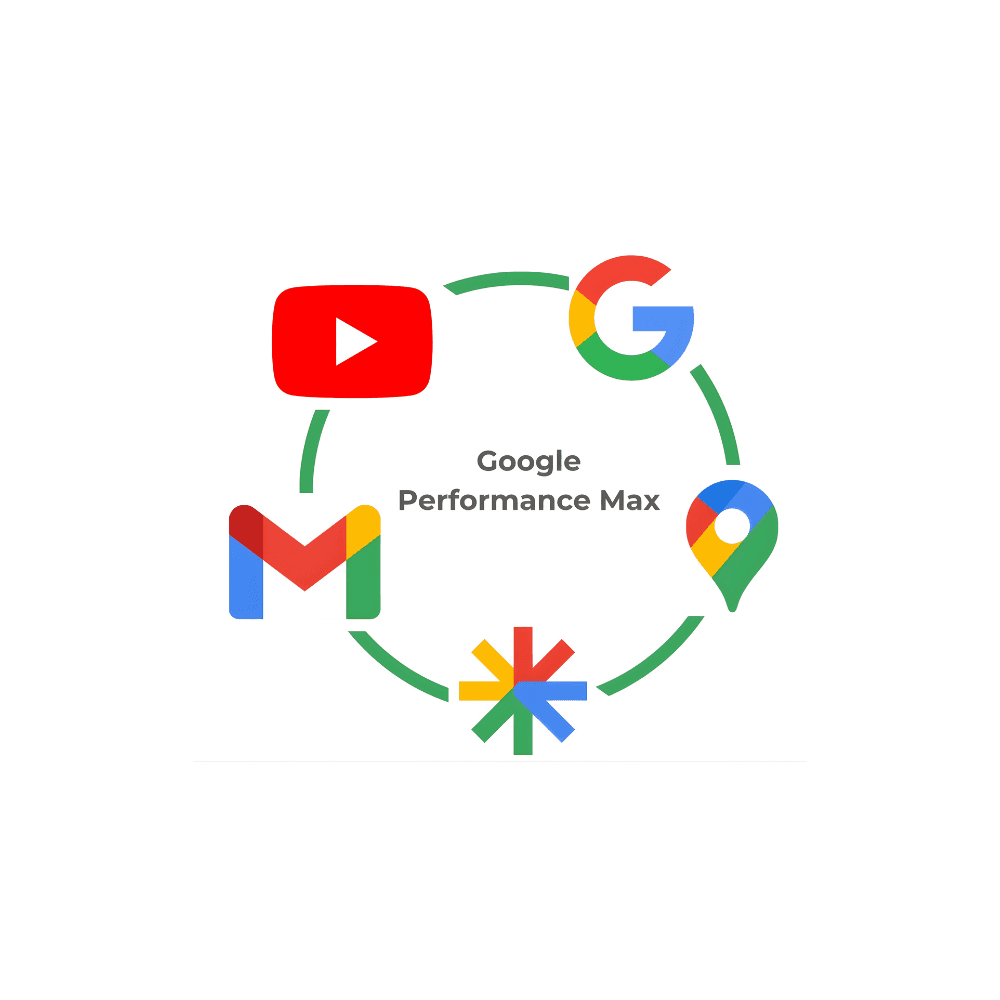
PMax is Google’s fully automated campaign type that runs ads across:
Search
Display
YouTube
Gmail
Discovery
It uses machine learning to allocate budget and adjust creative in real time — based on audience signals, not manual inputs. Which is powerful — but also means you lose direct control.
The Solution: Smart Structure + Creative Feeding
Small budgets can win on Performance Max — but only when you treat it like a system, not a slot machine.
Here’s how to build a lean, effective PMax campaign without wasting budget:
1. Segment Campaigns by Intent
Avoid throwing everything into one mega-campaign. Segment by:
Product category
Service type
Customer stage (e.g., lead gen vs. remarketing)
This allows Google to train the model with more focus and relevance — and keeps your budget from spreading too thin.
2. Feed It High-Quality Creative
PMax builds its ads from the assets you provide.
Supply:
5+ strong headlines (clear, value-driven)
5+ compelling descriptions (use benefit language)
At least 1 high-resolution video (16:9 and vertical)
Multiple square & portrait images
Callouts and sitelinks if applicable
✅ Tip: Write copy like it’s for a landing page — not a billboard. You need clarity and urgency.
3. Use Audience Signals Wisely
While PMax automates targeting, you can guide it with “audience signals” like:
Website visitors
Past converters
Custom segments (e.g., people searching for “pool remodeling” or “HR software”)
This doesn’t restrict targeting — it nudges the algorithm in the right direction.
4. Track Conversions Accurately
If your conversion tracking is off, the algorithm can’t learn.
Double-check:
Primary conversion events are clearly defined (e.g., leads, purchases)
GA4 is integrated
Enhanced conversions are enabled
Your thank-you or checkout pages are firing properly
5. Set a Realistic Budget and Timeline
PMax needs time to learn. If you're testing with:
Less than $1,000/month = run a single, focused campaign for 30+ days
$2,000–$3,000/month = test 2 campaigns (split by service or goal)
Avoid:
Daily toggling or edits
Too many asset changes mid-flight
Frequent pausing/restarting
Let the system optimize.
6. Review Insights, Not Just ROAS
PMax gives limited control, but solid insights — use them to adjust your messaging and creative:
Top-performing assets
Audience insights
Location performance
Demographics
Even without full control, these signals help you steer future campaigns.
Final Thought: The Machines Aren’t the Problem — Bad Strategy Is
Performance Max isn't a scam. It's a new tool that requires a new mindset.
✅ Set up campaigns correctly
✅ Feed it strong creative
✅ Give it time
✅ Watch and refine based on insights
If you do that, even a $1,000/month budget can drive real ROI.
Need Help Navigating PMax?
At Good Wolf Marketing, we help small businesses set up intelligent, cost-effective Performance Max campaigns that don’t waste your ad dollars.
We audit your current Google Ads setup
Help create conversion-focused assets
Build and monitor PMax campaigns for your goals
Translate reporting into clear actions
Check out our other strategy guides on the Good Wolf Blog
Hashtags:
#digitalmarketingagency #paidads #onlinemarketing #MetroDetroitMarketing #MarketingStrategy #digitalmarketingtrends #BrandVisibility #GoogleAds #MichiganMarketingAgency
Authoritative Source:
Search Engine Land – How to Improve Performance Max Campaigns
The Problem: Small Businesses Are Losing Control in Google Ads
Google’s Performance Max (PMax) campaigns promise:
Automation
Smarter targeting
Higher conversion value
But for many small businesses, the reality has been:
Unclear reporting
Wasted spend
Low-quality traffic
And if you’re working with less than $2,000/month, Performance Max can feel like lighting money on fire — unless you know how to work with the algorithm, not against it.
What Is Performance Max?
PMax is Google’s fully automated campaign type that runs ads across:
Search
Display
YouTube
Gmail
Discovery
It uses machine learning to allocate budget and adjust creative in real time — based on audience signals, not manual inputs. Which is powerful — but also means you lose direct control.
The Solution: Smart Structure + Creative Feeding
Small budgets can win on Performance Max — but only when you treat it like a system, not a slot machine.
Here’s how to build a lean, effective PMax campaign without wasting budget:
1. Segment Campaigns by Intent
Avoid throwing everything into one mega-campaign. Segment by:
Product category
Service type
Customer stage (e.g., lead gen vs. remarketing)
This allows Google to train the model with more focus and relevance — and keeps your budget from spreading too thin.
2. Feed It High-Quality Creative
PMax builds its ads from the assets you provide.
Supply:
5+ strong headlines (clear, value-driven)
5+ compelling descriptions (use benefit language)
At least 1 high-resolution video (16:9 and vertical)
Multiple square & portrait images
Callouts and sitelinks if applicable
✅ Tip: Write copy like it’s for a landing page — not a billboard. You need clarity and urgency.
3. Use Audience Signals Wisely
While PMax automates targeting, you can guide it with “audience signals” like:
Website visitors
Past converters
Custom segments (e.g., people searching for “pool remodeling” or “HR software”)
This doesn’t restrict targeting — it nudges the algorithm in the right direction.
4. Track Conversions Accurately
If your conversion tracking is off, the algorithm can’t learn.
Double-check:
Primary conversion events are clearly defined (e.g., leads, purchases)
GA4 is integrated
Enhanced conversions are enabled
Your thank-you or checkout pages are firing properly
5. Set a Realistic Budget and Timeline
PMax needs time to learn. If you're testing with:
Less than $1,000/month = run a single, focused campaign for 30+ days
$2,000–$3,000/month = test 2 campaigns (split by service or goal)
Avoid:
Daily toggling or edits
Too many asset changes mid-flight
Frequent pausing/restarting
Let the system optimize.
6. Review Insights, Not Just ROAS
PMax gives limited control, but solid insights — use them to adjust your messaging and creative:
Top-performing assets
Audience insights
Location performance
Demographics
Even without full control, these signals help you steer future campaigns.
Final Thought: The Machines Aren’t the Problem — Bad Strategy Is
Performance Max isn't a scam. It's a new tool that requires a new mindset.
✅ Set up campaigns correctly
✅ Feed it strong creative
✅ Give it time
✅ Watch and refine based on insights
If you do that, even a $1,000/month budget can drive real ROI.
Need Help Navigating PMax?
At Good Wolf Marketing, we help small businesses set up intelligent, cost-effective Performance Max campaigns that don’t waste your ad dollars.
We audit your current Google Ads setup
Help create conversion-focused assets
Build and monitor PMax campaigns for your goals
Translate reporting into clear actions
Check out our other strategy guides on the Good Wolf Blog
Hashtags:
#digitalmarketingagency #paidads #onlinemarketing #MetroDetroitMarketing #MarketingStrategy #digitalmarketingtrends #BrandVisibility #GoogleAds #MichiganMarketingAgency
Authoritative Source:
Search Engine Land – How to Improve Performance Max Campaigns
The Problem: Small Businesses Are Losing Control in Google Ads
Google’s Performance Max (PMax) campaigns promise:
Automation
Smarter targeting
Higher conversion value
But for many small businesses, the reality has been:
Unclear reporting
Wasted spend
Low-quality traffic
And if you’re working with less than $2,000/month, Performance Max can feel like lighting money on fire — unless you know how to work with the algorithm, not against it.
What Is Performance Max?
PMax is Google’s fully automated campaign type that runs ads across:
Search
Display
YouTube
Gmail
Discovery
It uses machine learning to allocate budget and adjust creative in real time — based on audience signals, not manual inputs. Which is powerful — but also means you lose direct control.
The Solution: Smart Structure + Creative Feeding
Small budgets can win on Performance Max — but only when you treat it like a system, not a slot machine.
Here’s how to build a lean, effective PMax campaign without wasting budget:
1. Segment Campaigns by Intent
Avoid throwing everything into one mega-campaign. Segment by:
Product category
Service type
Customer stage (e.g., lead gen vs. remarketing)
This allows Google to train the model with more focus and relevance — and keeps your budget from spreading too thin.
2. Feed It High-Quality Creative
PMax builds its ads from the assets you provide.
Supply:
5+ strong headlines (clear, value-driven)
5+ compelling descriptions (use benefit language)
At least 1 high-resolution video (16:9 and vertical)
Multiple square & portrait images
Callouts and sitelinks if applicable
✅ Tip: Write copy like it’s for a landing page — not a billboard. You need clarity and urgency.
3. Use Audience Signals Wisely
While PMax automates targeting, you can guide it with “audience signals” like:
Website visitors
Past converters
Custom segments (e.g., people searching for “pool remodeling” or “HR software”)
This doesn’t restrict targeting — it nudges the algorithm in the right direction.
4. Track Conversions Accurately
If your conversion tracking is off, the algorithm can’t learn.
Double-check:
Primary conversion events are clearly defined (e.g., leads, purchases)
GA4 is integrated
Enhanced conversions are enabled
Your thank-you or checkout pages are firing properly
5. Set a Realistic Budget and Timeline
PMax needs time to learn. If you're testing with:
Less than $1,000/month = run a single, focused campaign for 30+ days
$2,000–$3,000/month = test 2 campaigns (split by service or goal)
Avoid:
Daily toggling or edits
Too many asset changes mid-flight
Frequent pausing/restarting
Let the system optimize.
6. Review Insights, Not Just ROAS
PMax gives limited control, but solid insights — use them to adjust your messaging and creative:
Top-performing assets
Audience insights
Location performance
Demographics
Even without full control, these signals help you steer future campaigns.
Final Thought: The Machines Aren’t the Problem — Bad Strategy Is
Performance Max isn't a scam. It's a new tool that requires a new mindset.
✅ Set up campaigns correctly
✅ Feed it strong creative
✅ Give it time
✅ Watch and refine based on insights
If you do that, even a $1,000/month budget can drive real ROI.
Need Help Navigating PMax?
At Good Wolf Marketing, we help small businesses set up intelligent, cost-effective Performance Max campaigns that don’t waste your ad dollars.
We audit your current Google Ads setup
Help create conversion-focused assets
Build and monitor PMax campaigns for your goals
Translate reporting into clear actions
Check out our other strategy guides on the Good Wolf Blog
Hashtags:
#digitalmarketingagency #paidads #onlinemarketing #MetroDetroitMarketing #MarketingStrategy #digitalmarketingtrends #BrandVisibility #GoogleAds #MichiganMarketingAgency
Authoritative Source:
Search Engine Land – How to Improve Performance Max Campaigns
Related Blogs
Check our other blogs with useful insight and information for your business.



Related Blogs
Check our other blogs with useful insight and information for your business.